
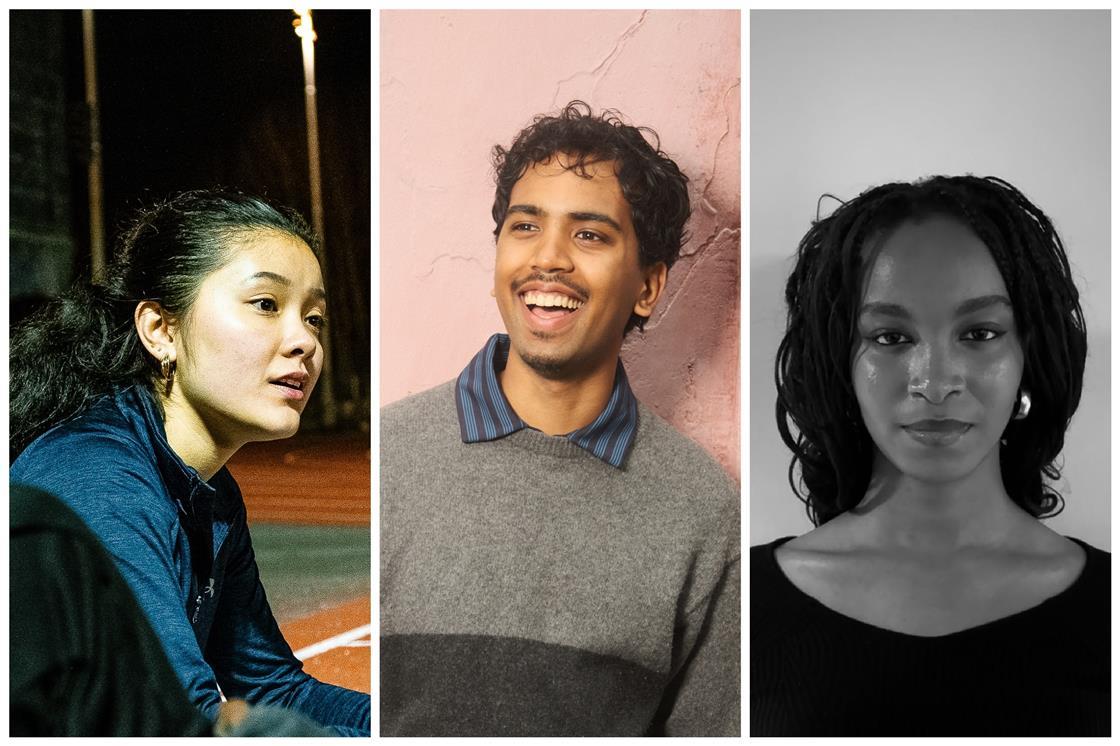
In further coverage of social-value innovator Neil Onions and Beyond the Box, BD's Mary Richardson spoke to three young people engaged in groundbreaking projects for the built environment within the organization. Now at different stages of their journeys to becoming architects, they shared how their experiences with Beyond the Box sparked their passion for architecture, plus offering unique insights into building design.
In the latest installment of our Boomers to Zoomers series, BD spoke with three young people from underrepresented backgrounds who are about to embark journeys in the built environment. As graduates of Beyond the Box—a social enterprise aimed at elevating young voices in architecture and urban design—each has taken a different pathway into the industry, one more tangentially influenced by practical experiences, community-oriented projects, and commitment to questioning the traditional ways of doing things.
They stated that their involvement in Beyond the Box provided them with the skills, confidence, and chance to delve into architecture, among other things related to the current state of the industry. The tales speak to the real openings for a more inclusive and socially engaged profession, as well as the continued obstacles.
The hard-hitting love messages from them, which call for more engagement, better accountability, and a shift in mindset towards a more user-centered design, would benefit the industry if listened to. At the same time, they bring in new energy and ideas, proving a deep commitment to architecture that is not just attractive but also fundamentally aligned with the needs of the communities and individuals it is intended to serve.
Seventeen years old; that is when everything started—my mind was overflowing with ambitions yet no concrete plan to follow. Just a girl from the outskirts of East London, Tower Hamlets, filled with dreams but without a strategy.
During my time in school, the message was clear: put in the effort to study, gain admission to a reputable university, and land a good job. However, I felt stuck caught in between my love for the arts and sciences. Teachers often urged me to pick just one. But I like to adopt the more principled approach...
A big change happened in 2021. I took part in the design competition of People’s Pavilion which Beyond the Box organized; a project that is changing the lives of many young people—mine for instance.
It was an eye-opening experience for a girl who before had felt quite misplaced.
I took part in a scheme which brought together young people from London to create a design for a pavilion. The prize? For their winning design built at Here East in the Queen Elizabeth Olympic Park.
We from Tower Hamlets won, and our design came to life. For someone who before felt a bit lost, this was life-changing. That experience sparked a journey that I am still on. I have stayed connected with Beyond the Box as an equity designer, young curator, and poet, sharing my poetry in their newest showcase, Expressions of Resilience.
As an equity designer I worked with some young girls from south London to understand their experiences and bring their views into the redesign of Crystal Palace National Sports Centre. Based on their feedback, I developed a new proposal which I presented at City Hall to major architects, engineers, and CEOs demanding a better inclusive and user-focused approach in architecture.
So what comes next? I am now in my final year of architecture at the University of Cambridge. Yes, you read that right. A dream, once perceived as unattainable, has become real. Cambridge serves as a launching pad for future accomplishments—first being propelled by Beyond the Box.
Architecture is not my only passion; I am also a poet. In my opinion, poetry and architecture are not separate things; they are linked. My path as a budding architect starts with mixing different subjects to form architecture that is easy to approach and meaningful. While the word 'multidisciplinary' is often used as a fad, I use poetry to cut through the hard words that can alienate people from design.
I have exhibited architectural poetry projects at City Hall and collaborated with Morris + Company and Open City to articulate architectural concepts in poetic form to the people most affected—the future inhabitants and users of these spaces. At its core, architecture ought to be community-focused.
Who am I, then? An aspiring poet-architect which is somewhat of a new label to me, and more recently, a developing practitioner of creating spaces that inspire and amplify the voices of the communities they sit within. You can explore some of my work on my website, and I also contributed a blog post for the Humanise project by Thomas Heatherwick.
I grew up in East London and am the first in my family to go to university, also the first to study architecture. This year (2024), I finished my course at the Bartlett School of Architecture.
As a member of Beyond the Box, I have taken part in many exciting teamwork projects. Currently, I am working with the codesign committee of young people for Barbican Renewal project. The workshops we run can define what the future look of this landmark will be.
I also won the Expressions of Resilience competition, which I entered with Lily Nguyen. This was our chance to take over the 1 Quaker Street event space and design it ourselves. We put together an exhibition that celebrated various kinds of protest and also home in East London — featuring female artists from a broad spectrum of global-majority cultures.
<350 characters
<150 words
<150 characters per sentence
<30% self-plagiarism
<5% plagiarism
Achieving New Design Language
Cultural exchange, pedagogy, and the conveyance of meaning have always interested me. Therefore, in my final year at university, I took part in an exploration to develop a design methodology grounded in deconstruction as well as the examination of language itself- this process involving the transformation of written language into a more basic emotional lexicon and the establishment of a corresponding sensory spectrum. I later integrated this into my design, perceiving the architecture as a spectrum within which every material chosen, color applied, and formal expression triggers an emotional response. Ultimately, this strategy allowed for the medium of communication that conveys meaning amid creating learning environments for its communicants.
Making art.
My participation in teaching practices goes beyond design and includes my work with the art group Cor-Creative, which is a group of young creative students working on better access to jobs and higher education. We work together on experimental ideas and practices; the group works as a peer mentoring network.
As I move forward in my career, I would like to learn from communities, colleagues, and skilled professionals to acquire new insights, experiences, and knowledge for myself while contributing to others.
The future opportunities of architecture.
I envision design as community-oriented and bold architecture that responds to the current issues of today, respects historical contexts and archives, and brings lasting legacies to tomorrow.
Dialogue should be balanced throughout all the RIBA stages. Consider the building as a platform for activity, not just an object. The architecture I want to create will resonate with the community and the world it serves. Follow me @akif.ur.
I study architecture at Bartlett UCL, in my second year. My path into the field of architecture began when I joined a design program at the Design Museum. It triggered involvement with other organizations, such as Beyond the Box, where I was part of the team that won the People's Pavilion for 2023.
I got a RIBA participation certificate for the People's Pavilion program and was proud to win a Diversity and Inclusion award at the annual RIBA student awards for my first-year project, which gave a study area for neurodivergent people.
Changing beliefs
The development of architecture through time has been thoroughly looked at and written down. But, it doesn't need much checking to see the slow changes in ideas and rules over years.
The purpose of creating spaces that truly and accurately fulfill the requirements of the people we assert to design for has become rather ambiguous in contemporary contexts. This objective has been greatly overshadowed by economy, striking appearances, and elaborate traits meant to dazzle and 'stimulate the senses,' with an aspiration to gain awards for aesthetic inventiveness. Tragically, it is at the expense of those whose needs should be at the center of our design activities.
The needs of people have not been met by the built environment.
Events like the Grenfell fire, in particular, highlight the shortcomings of the built environment and its professionals in failing to serve the public properly. The outcome of decision-making and drastic budget-cutting measures has led not only to tragic loss of life but also to a loss of trust between people and buildings.
Bringing humanity back to architectural design.
Architecture is at its best a show of creativity, where artistic expression balances with the importance of teamwork to achieve good results.
Requirements, culture, and the aspirations of the people who occupy buildings should be addressed by structures. The best way to ensure this is through the incorporation of user opinions in the design process. Being a student, I have noted this principle is not really stressed as a priority for future architects, especially not very under what is urgently needed now.
By expanding the definition of the 'built environment' to include what it is and who it comprises, myriad design opportunities come to light. The idea of a future, where insights from diverse fields and professions help create spaces that are both functional and laden with meaning appropriate to their context, is truly exciting.
Through my journey with Beyond the Box, I came to realize how architecture can evolve as a reply, underlining sensitive design that embraces the requirements of users. Such an approach alters the undertaking into an emotional process, helping buildings turn into lively creations that honor human experience while valuing the nearby community and nature.
To move forward, we must reconsider the role of architecture as a tool for healing and justice. This way, we can repair broken relationships and lift voices that have long been silenced, designing works that touch our senses and make clear our care for all who use them.