
Exploring the Masterpieces
So, let’s talk about one of the absolute gems at the Metropolitan Museum of Art, a striking painting from the exhibition "The Soul of Nature" running until May 11. Picture this: a wild, raging ocean at night, smashing against jagged rocks, illuminated only by moonlight. There’s this tiny monk silhouette, all by his lonesome, staring into the abyss. Pure poetry meets sheer terror, right? It’s so dramatic, it totally reminds me of something François-René de Chateaubriand, a buddy of Friedrich’s and a fellow Romantic, wrote once about his turbulent beginnings – something about not a day passing without him thinking of his stormy first moments on Earth.
Caspar David Friedrich's Background
Caspar David Friedrich, whose work we’re gabbing about, was a dude born in 1774 right on the Baltic Sea in what is now Germany. Most of his life was in Dresden where he crafted these mystical, moody landscape scenes. And man, did he nail the whole tortured artist vibe from the get-go. The year he was born, Goethe’s "The Sorrows of Young Werther" hit the shelves, a story about a guy so wrecked by unrequited love that he ends up taking his own life. That book stirred up such a frenzy that guys started dressing like the protagonist and a few tragically followed his path in an early bout of fangirling gone wrong.
The Impact of the French Revolution
Friedrich was just a teen during the French Revolution – chaotic times, especially with the German-speaking Queen of France getting the axe. That event split the European artsy folks big time. While some were lighting the torch of revolution, others like Friedrich were more into brooding over nature and waxing poetic about moons and storms rather than clear skies and straight paths. His early art was all about capturing these vibes on canvas, starting with straightforward religious iconography and then shifting towards using nature as his canvas to express spiritual and emotional turmoil.
Evolution of His Artistic Style
If you go through the exhibition, you’ll notice his style evolve – often there’s a majestic mountain with a religious symbol perched right at the top, and then everything sort of blends into a misty mix of trees, seas, and skies farther away. Super atmospheric.
Visiting the Exhibition
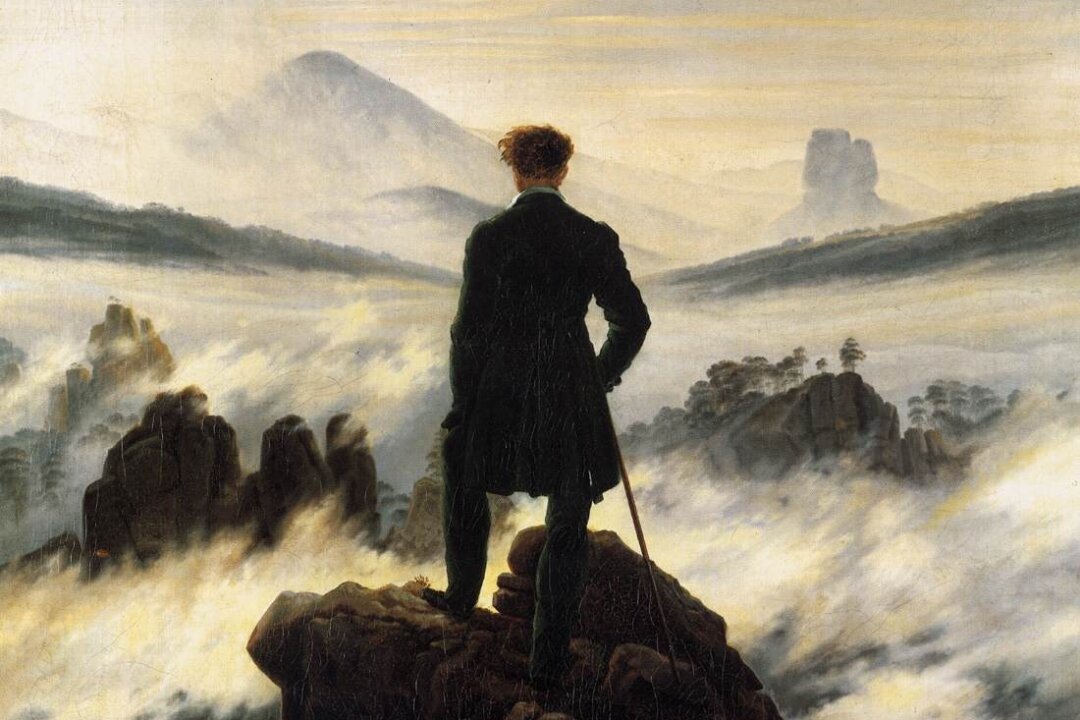
Now, his most famous piece, "Wanderer above the Sea of Fog", is quite the spectacle but also a pain to view because everyone and their cousin wants a selfie with it. Seriously, it’s like trying to see past a wall of smartphones – the ironies of trying to admire a piece about solitude in a crowd, right? And now it’s more meme than masterpiece, which makes it hard to appreciate the real deal.
The Blend of Past and Present
Wrapping this up, "The Soul of Nature" does this neat trick of balancing between conjuring up the present-day scenes with its throwbacks to Romanticism and even earlier times. You know what’s funny? How the exhibit is parked right amongst ancient statues, kind of where today’s online crowd, sporting Greek statue profile pics, would love. Speaking of time-bending, some of Friedrich’s paintings parade young 1800s fellas in medieval digs, daringly defying bans from 1819 due to their liberal vibes.
Conclusion
It’s this mix of past and future, combined with the occasional melancholy and drama, that continues to draw people, trying to make sense of their place, just like Friedrich once did. And just maybe, as we toggle between AI and old-school, this guy’s work gives us a glimpse of how to weather our own era’s storms.