
Monarchies in Africa: Significant Roles
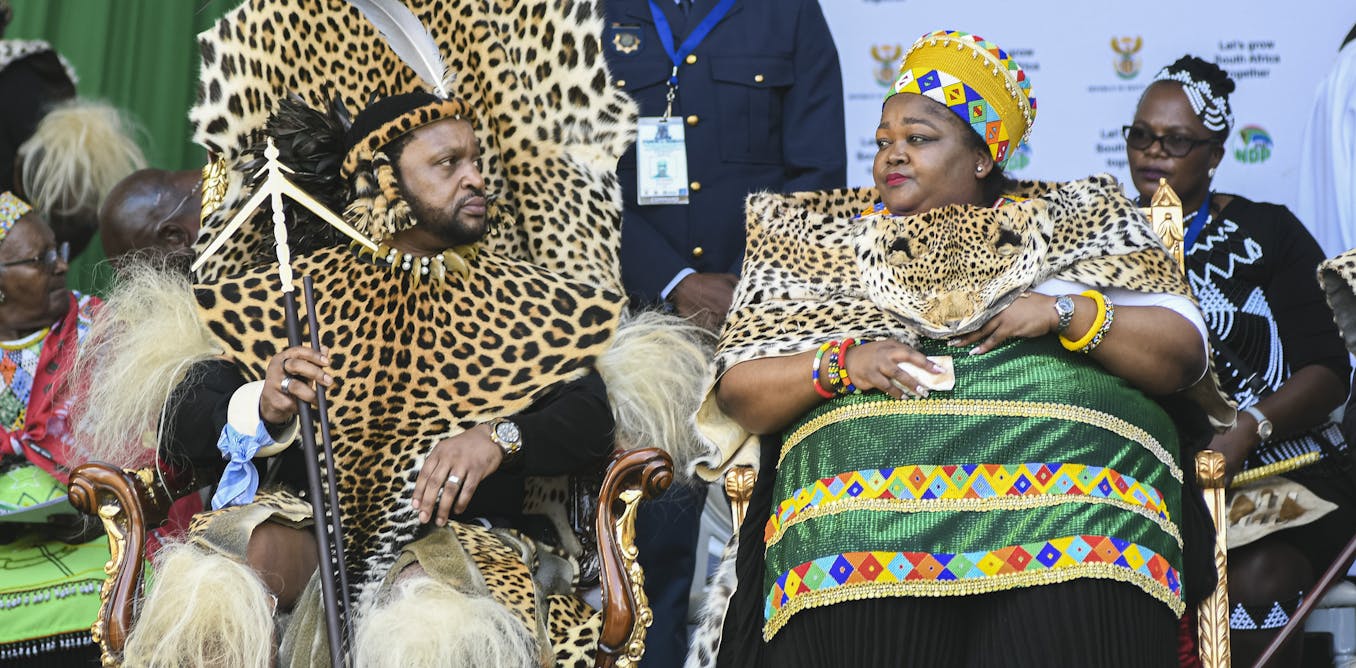
Monarchies in Africa have significant roles to play within their individual nations. In South Africa, there happens to be a very strong connection between many Zulu individuals and the royal family as well as with traditional methods of resolving disputes like divorce. While polygamy is allowed, in general, divorce is not entertained and even when there seems to be a deadlock in the functioning of the marriage.
AmaZulu King Files for Divorce
The news on the street is that AmaZulu king Misuzulu kaZwelithini recently filed for divorce from his first wife Queen Ntokozo kaMayisela to pave way for marrying his fourth wife. She prayed for the intervention of the court to stop the marriage because, argues here that for them it's a civil marriage in 2021—shortly after his ascension to the throne—re-marriage is any union without a divorce. Her application is dismissed, and the king is yet to move ahead with the new marriage.
Public Response and Cultural Implications
This has become a talking point among South Africans as the king is considered the custodian of Zulu traditions. His attempt to get a divorce touches on the very sensitive and important matters of changing Indigenous marriage and divorce laws. To shed more light on the subject matter, we spoke to Antony Diala, an expert in African customary law.
The Identity of the Zulu Royal Family
What is the identity of the Zulu Royal Family?
The Zulu royal family is one of the great dynasties. It started in the 1500s so they are the ruling house of the AmaZulu nation. Which is about 10 million people, the largest ethnic group in South Africa, it is found mainly in KwaZulu-Natal. Their closest relations are other Nguni people with whom they share wider linguistic and ancestral connections.
Legacy of Zulu Monarchs
Noted among Zulu monarchs is Shaka kaSenzangakhona, popularly known as Shaka Zulu, who transformed the AmaZulu nation into one of the mightiest empires in the 1800s. He left no heirs, so after his death, his half-brothers took over leadership. Cetshwayo kaMpande led Zulu forces during the Anglo-Zulu War in the colonial times.
Finances of the AmaZulu Royal Family
The king has consorts, with whom he has children hence the core royal family of the AmaZulu. These are given a total of about $4.2 million (which is R77.5 million) in annual allocations that come from the KwaZulu-Natal provincial government. That is just about equal to what they earn out of tenancy fees that are collected by them in administering the Ingonyama Trust, which is an organization that owns that maximum percent of the land in KwaZulu-Natal, approximately 30%.
Zulu Culture and Attitudes towards Divorce
What is the attitude of the Zulu culture toward divorce?
This decision of the king is quite notable. The wives do not really leave the palace when the relationship ceases with the king. Typically, as per the customary laws of the AmaZulu, divorce is somewhat looked down upon.
Clan Dynamics and Marriage Contracts
Clan dynamics have an enormous effect on the marriage contract, how long it stays or falls apart. In such a precapitalist society, where communal kinship was strong and the community worked collectively to generate income, bridewealth would be — mostly in the form of livestock to be given to the bride's family — acquired by the family of that man. Because of the huge investment that both families were making in the marriage, any signs of danger to the marriage would most likely be intervened by the two families of the partners, hence creating conditions under which divorce was something of a rarity.
Historical Overview of Divorce in Zulu Culture
Learn more: The Zulu monarchy and the avenues through which royal women have been known to express their influence and strength over time.
Before the period of European colonialism, divorce proceedings did not necessarily require the involvement of the court. Under no condition could a marriage be dissolved, except by proving witchcraft or adultery or lunacy.
In the past, marriage was all about connecting families. Things have changed, a former wife may keep the house if she remains in good terms with her ex-husband's family. This is just what in-motion change involves.
Western Influence on Zulu Society
What is the influence of the Western culture on society?
The changes that have occurred in Western cultures as a reflection of the socio-economic changes brought about by colonialism and globalization are those pertaining to technology, urbanization, average personal income, formal education, the mass media, and statutory laws. Having insight into how these changes filter down to divorce is of critical importance.
Indigenous laws are developed within closely knit social groups to enhance the welfare of the clan. Contemporary realities speak of individualism, urbanization, personal wealth, and simplistic gender equalities. Before now, the family of the husband of the bride would cooperate and give bridewealth. If the couple divorced, part or all of this bridewealth was returned to mark the finality of the marriage. It was the strong communal ties that committed the clan to support the existence and stability of marriages.
There is no need for bridewealth to validate a customary marriage. Its role in divorce is minor, with only state courts having the right to dissolve marriages. However, different sets of customary laws regulate all aspects of marriage.
What my finding has shown is the fact that the western world contributes to divorce as African people change their customs according to the modern-day situation. In other words, Zulu indigenous behavior is changing in accordance with norms based on Western values.
Legal Dynamics between Indigenous and Western Laws
With the value the Zulu society still attaches to marriages, there is a gradual change in their attitude towards divorce, brought in by Western cultures. The change underscores the conflict between indigenous laws and the legal regime created by the Dutch and British when applying through colonization.
Source: The Zulu Kingship Principle: A Living Vehicle of Customary Law in Future South Africa
The merging of English customary law, Germanic tribal law, and Roman legal principles forms the basis on which Common Law in South Africa rests. The problem, however, is that it is getting increasingly difficult to reconcile the indigenous laws with Roman-Dutch law because, as time goes by, Western culture has continued to gain influence in the indigenous legal systems.
In the 1996 established South African constitution, the court is technically bound to "apply (recognize) customary law when it is applicable." The only condition is that the customary laws acknowledged should be in line with constitutional values and any laws that govern customary law.
Indigenous Laws and Constitutional Values
Indigenous laws should be in compliance with the constitutional maxim of right to equality, non-discrimination, and human dignity. This means that the oversight of indigenous laws assigns Western values ideological leadership over and above those of indigenous extraction, thus forcing Africans to run after normative validation against Western standards.
Learn more: Explaining some of the importance of African customary law in modern society.
Policy Balancing Between Laws
A focus on policy is the essential balancing act between Indigenous laws and state law. Policy captures the way Africans alter their practice under the weight of socioeconomic imperatives.
The adaptations bring about customary laws born out of what practices come to be perceived as mandatory by the community. For the balance between indigenous and western cultures, there must be acknowledgment and interpretation of indigenous laws through their inherent values (not applying the values of the legal frameworks imposed during colonial times) to balance things out.