
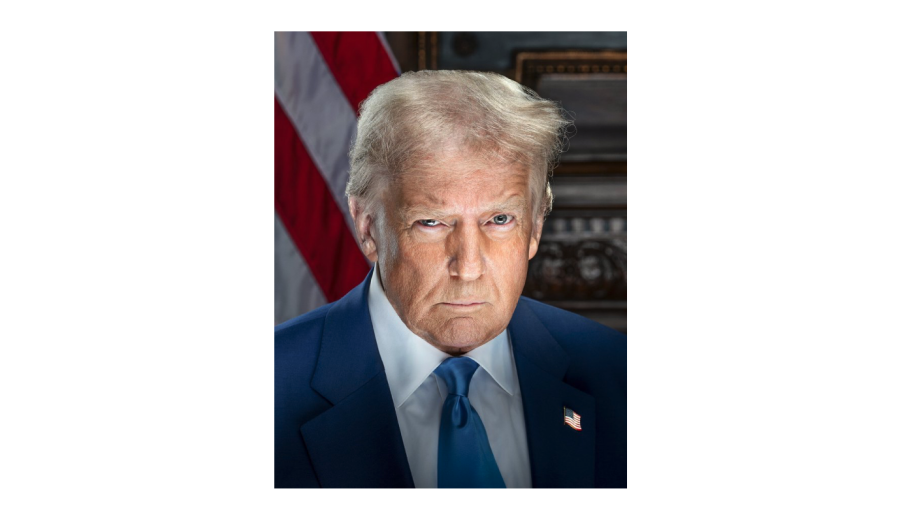
The details of the new U.S. strategy for Ukraine was thereby outlined by Trump during his first initial Cabinet meeting. The terms were stringent and place the majority of the responsibility on Europe. / bne IntelliNews
The details of the new U.S. strategy for Ukraine were thus outlined by President Donald Trump during his initial Cabinet meeting on February 26. The conditions are severe: the majority of the responsibility is on Europe.
Trump told reporters "Ukraine must say it’s neutral country, nobody should ever think about Ukraine in regards to the word NATO,” He added: “I don’t want to tell you, but you don’t want to be disappointed. I never told this to anybody. I don't want to discuss this, because we're discussing a very serious matter." the president added.
He mentioned that the United States would not provide any security assurances for Ukraine, which constitutes a key element of the strategy of victory shared by the President of Ukraine, Volodymyr Zelenskyi, with his Western partners at the end of last year.
"I will not give security guarantees at all levels," he said. "The Europeans will take over this, which is their neighborhood. But we shall ensure that everything goes on smoothly," he added, referring to the complicated process of enlargement negotiations.
He says he imagines Vladimir Putin will be looking for him to make some guarantees on behalf of the US as well during the ceasefire negotiations. "Yes, he will. He has no choice," Trump told the reporter.
Asked about the possibility of discussing the return of Crimea to Ukraine, Trump said that it was "certainly a subject that is up for discussion," but he added immediately that it was "very, very hard." He pledged to work to get the "best deal" for both Ukraine and Russia.
France and the United Kingdom have expressed their willingness to contribute a peacekeeping force of about 30,000 troops; notwithstanding, both countries are insisting that the US must provide some sort of security guarantee for this plan, an idea that the White House has steadfastly refused until now.
On February 27, Russian Foreign Minister Sergei Lavrov repeated former remarks explaining how the option of Western, NATO-supported troops deploying into Ukraine was a nonstarter for Moscow. He made it abundantly clear that the Kremlin would not even consider any option of involving Western peacekeepers in Ukraine. In some quarters, this has been taken to imply a more basic demand—that there should, at the very least, be a U.N. mandate.
The majority of the member states of the European Union have refused to join the peace mission. They fear it may provoke the Russians. Hence, they don't want to be involved. "Dangerous," warned Croatian President Zoran Milanovic right after the meeting at Ljubljana's Brdo Castle with Slovenian President Natasa Pirc Musar.
"Who are these 30,000 peacekeepers? Where is their deployment location? Let's presume Russia agrees to this, which is of course out of the question, but in the context of those who must go there, then indeed this poses a grave threat," Milanovic said in a statement from his office.
Emmanuel Macron failed in his quest for security agreements or peacekeeping forces when he was this week visiting Washington. Also, UK Prime Minister Keir Starmer is due to arrive on February 27th to do the same for those initiatives.
The request claims that, in Washington, London and Paris ought to provide ground forces, aviation, and naval assets, which will be capable of being used by peacekeepers for their protection. —
Trump said the tough minerals deal expected to be signed with Zelenskiy on February 28 would be enough to keep Ukraine safe. While Bankova confirmed the signing of the third version of the minerals deal, she noted the text of the entire agreement does not have security commitments to Ukraine or commitments of ongoing military or financial assistance post-conflict. Still, Trump said, "That's a great deal for Ukraine, too."
"We will be working over there on the land. In that sense, it provides a kind of automatic security, because no one, no just no one, will get anywhere near our people until we get up and leave."
Well, we will be there in that manner."
Europe, he believes, "will be observing it all with great attention."
Informed by a publication by Ukrainska Pravda, Trump said: "I understand that both the UK and France have expressed their willingness to deploy what they refer to as peacekeepers to the site in Ukraine and I believe that is a positive development.
Growing more and more worried about swiftly improving European apprehension has shattered makeshift ties that have ever since the ceasefire talks started in Riyadh on February 18 between the White House and the Kremlin.
In a development marking the same as the third anniversary since the war started, the US has joined Russia in voting against a UN resolution to condemn it as the aggressor in Ukraine's ongoing war. The resolution was drafted by Kyiv and which had all European Union countries except Hungary behind it, reinstate the territorial integrity of Ukraine with a clear statement that Russia is the aggressor.
On February 26, while several of its western partners refrained from doing so, the US declined to sign a statement from World Trade Organization (WTO) condemning Russia's aggression.
Secretary of State Marco Rubio, speaking as head of the delegation, elicited the phrase: "There's an opportunity to establish a historic economic partnership between the U.S. and Russia"—leaving one with the impression that the White House plans to make deals with Russia.
It has now been postponed. Ceasefire negotiations were originally scheduled to continue on February 27 with foreign ministers in Istanbul.
Kirill Dmitriev leads Russia's sovereign wealth fund. He confirmed details of the first encounter defined by three words: "The Arctic." This region should be home to 80% of Russia's gas recovery and also 17% of oil extraction in 2024. He further admitted there were separate rounds of discussions that kicked off on February 26 in Riyadh on potential business agreements.
Putin has fanned the rumors by asking his government to welcome the Western companies back in, but he insisted that their return should be on Kremlin's conditions, with the expectation for them to invest in the regions annexed from Ukraine.