
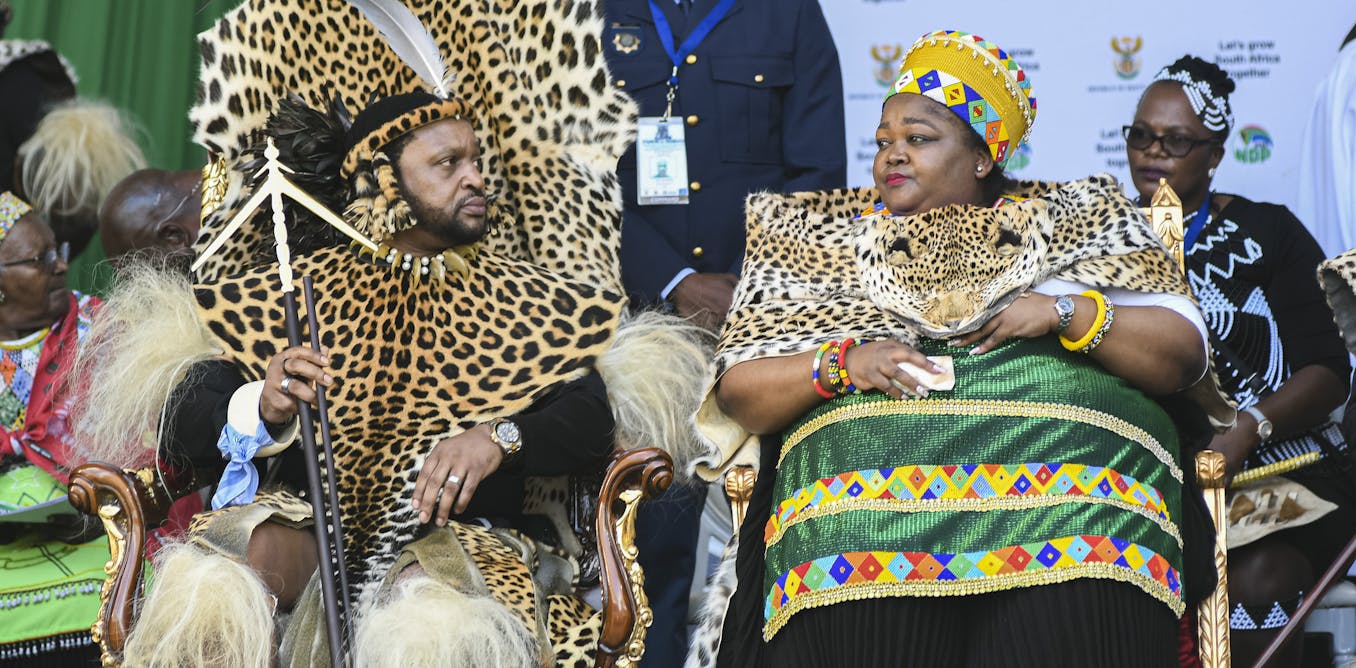
African Monarchies and Their Cultural Significance
African monarchies have a big place in their countries. In South Africa, a lot of Zulu people have a strong bond with both the royal family and traditional rules on alternative dispute resolutions, such as divorce issues. Here, while polygamy is allowed, in most cases that does not work well, a marriage should not be dissolved; divorces are not to be encouraged in general.
Recent Developments in the Zulu Royal Family
The latest sensational news related to AmaZulu king Misuzulu kaZwelithini is that he recently filed divorce papers against Queen Ntokozo kaMayisela, his first wife, to clear the way to marry yet another spouse. The queen emerged in court seeking an order to bar the wedding. Her main argument lay in the fact that the civil marriage between them, which was conducted in 2021, a few days after he had ascended to the throne, prohibits them from remarrying without divorce. Her application was dismissed, but to date, the king has stalled on the new marriage.
The Protector of Zulu Customary Law
An issue that is currently being discussed by South Africans is linked to the king as the prime protector of Zulu customary law. The granting of his divorce raises new issues about the statue-worthiness of indigenous marriage and divorce laws. We discuss this with Anthony Diala, an informed expert on African customary law.
Defining the Zulu Royal Family
Would you mind defining a royal family among the Zulu? The Zulu royal family is one of the most important bloodlines that dates back to the 1500s. They rule over the AmaZulu nation, the biggest ethnic group in South Africa with around 10 million people, mostly situated in KwaZulu-Natal province. They have deep, common ancestry and linguistic ties since they belong to the Nguni people.
Key Figures in Zulu Royal History
In Zulu royalty, the major figures include Shaka Zulu also known as Shaka kaSenzangakhona who, during the 1800s converted the AmaZulu clan into a mighty empire. A half-sibling took his place after him since he never sired any children. Cetshwayo kaMpande brought the Zulu through the Anglo-Zulu War at the time of colonization.
Understanding Zulu Divorce Culture
They are the king, his consorts, and their rightful heirs. Most of their budget, around $4.2 million (R77.5 million) annually, is supplied by the government of the KwaZulu-Natal province. Equally large is the money that comes from charges for tenancy under their management of the Trust availing of the right of the king over about 30% of the province's land. Where he was born, Eswatini, and the United States are the two places where the reigning monarch was raised and educated before he ascended to the throne in 2021. Therefore, he is a new generation king. As much as he is a political head, he's also a very important cultural figure; thus, it is his family that is making the headlines concerning a divorce.
Zulu Cultural Views on Divorce
The decision of the king is quite phenomenal because scarcely does the wife leave the royal household unless her relationships with the king have come to an end. By the traditional AmaZulu laws, women do not easily get separated from their husbands.
In pre‐colonial society, due to the strong clan structure and group effort for income generation, the bridewealth (lobola/ilobolo) used to be mainly collected by the groom's family, generally given to the bride's family by way of livestock. Since these families had made considerable investments in the marriage, it was the rare exception to the rule that both sides intervened to solve such problems at any rate of the union between their children, hence the rarity of divorce.
Western Influence on Zulu Marriage and Divorce
Prior to the colonial era, divorce did not need a court to ascertain the relationship breach which led to the fracture between the couple. Only if the pair was alleged to have practiced witchcraft on each other, or adultery, or one of them being insane would their marriage be annulled.
In the traditional view of marriage, it is between two families and not just two people. The condition also stands where, post-divorce, the woman has a harmonious relationship with her husband’s family and continues to reside in the family home. This dynamic, however, is changing.
Western Cultural Impact on Zulu Society
The changes that have come with colonialism and globalization in the socio-economic setting are apparent in Western cultures through technology, urbanization, personal income, formal education, social media, and statutory laws. The changes and their impact on divorce dynamics are critical.
The indigenous laws evolved among relatively closely knit social units related to clan well-being. Now, individualism, urbanization, personal accumulation of wealth, and gender equality in binary terms have set in. Conventionally, the groom's family would give the bridewealth in marriage. The bridewealth would then be returned—in full or in part—upon dissolution of the marriage to mark the termination of the marriage, with clanship cohesion reinforcing pressure for clans to preserve marriages.
Current Trends in Divorce and Marriage
Not until now is bridewealth required as a receipt of a customary marriage. Its relevance to divorce is decreasing and only the state courts are able to dissolve marriages. Anyway, every aspect of marriage is governed by different customary laws. Divorce rates go up in the western culture upon the modification of African traditional behavior to the new age movement. Modernity basically is what is restyling Zulu indigenous practices to conform with laws influenced by Western-based truths.
Zulu Attitudes Towards Marriage
Marriage is valued within the Zulu community, though with Western influence, Zulus are adopting more flexible attitudes toward divorce. This movement exposes the resistance between customary indigenous laws and the legal systems introduced through colonization by the Dutch and British.
Legal Framework Surrounding Indigenous Laws
Learn more: Insights from the Zulu kingship ruling and its implications for the future of customary law in South Africa.
Roman-Dutch law is a resultant of English customary laws, Germanic tribal laws, and Roman legal principles, thus providing the basis for common law in South Africa. A contemporary issue is the reconciliation of indigenous laws with Roman-Dutch law. The paper is a professional attempt to analyze some challenges related to the fusion of indigenous laws and Roman-Dutch laws, which emanate from increased Western influence on indigenous legal systems.
The 1996 constitution of South Africa provides that the courts "shall apply (recognize) customary law when that law is applicable." But all laws that are recognized must correspond to constitutional values and are also subject to any legislation that regulates customary law.
Constitutional Considerations for Indigenous Law
Indigenous laws must be constitutionalized in alignment with the great principles of equality, nondiscrimination, and human dignity. It means that the supervision over indigenous laws posits western values above and over those of indigenous origin. This makes Africans compelled to seek normative validation based on standards from the west.
Learn more: The Significance of the Customary African Laws in the Modern Society of Today 93%
Focusing on policy will enable the appreciation of how Africans adjust their informal practices in the context of changes in their socioeconomic reality within the frameworks of indigenous and state laws.
These adaptations generate the customs, described as practices which people consider binding on them. In an effort to strike a balance between the indigenous and Western cultures, it is important to recognize and understand the indigenous laws from their intrinsic values and not to use values responsive to the legal implantations made in the era of colonialism.